
How to Optimize Your Site for Google AI Overviews and AI Mode Answer Boxes
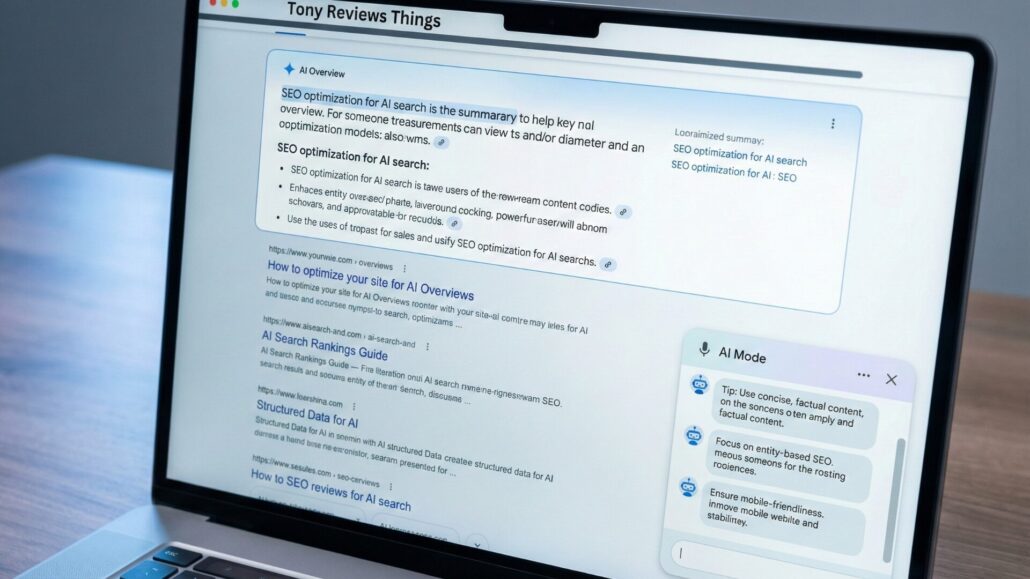
Google’s search landscape is continually evolving, with the introduction of AI Overviews and AI Mode marking a significant shift. These features, powered by generative AI, aim to provide direct, synthesized answers to user queries, often drawing information from multiple sources. For website owners and content creators, understanding how to optimize your site for these new formats is no longer optional; it’s crucial for maintaining visibility and driving organic traffic. This guide will walk you through the essential strategies to position your content effectively, ensuring it stands out in the age of AI search.
Understanding AI Overviews and AI Mode
Before diving into optimization, it’s vital to grasp what AI Overviews and AI Mode entail. AI Overviews appear at the top of Google Search results, offering a concise, AI-generated summary that directly answers a user’s query. These summaries often cite the source websites they drew from, providing a prime opportunity for direct clicks.
AI Mode, on the other hand, represents a more conversational and in-depth AI search experience. While less about direct citations in every turn, the underlying principles for content quality and authority remain the same. Both rely on Google’s AI to understand, synthesize, and present information effectively. Your goal is to make your content as AI-friendly as possible.
Before You Start: Essential Foundations
Optimizing for AI Overviews isn’t about chasing new tricks; it’s about perfecting core SEO principles with a specific AI lens. A robust foundation is key.
- Embrace Google’s E-E-A-T Principle: Experience, Expertise, Authoritativeness, and Trustworthiness are paramount. Google’s AI prioritizes content from credible sources. Ensure your site and authors clearly demonstrate these qualities.
- Solid Technical SEO: Your site must be easily crawlable and indexable. This includes fast loading times, mobile-friendliness, a secure HTTPS connection, and a clear site structure. AI can only synthesize what it can access and understand.
- User Experience (UX) Matters: While AI Overviews present summaries, the underlying expectation is that users might click through to your site. A positive user experience—easy navigation, clear layout, and accessibility—reinforces trust and encourages engagement.
How to Optimize Your Site for Google AI Overviews
Here’s how to strategically refine your site and content to improve its chances of appearing in Google’s AI-powered answers.
Focus on High-Quality, Comprehensive Content
The AI aims to provide complete answers Your content should reflect this by being thorough, accurate, and truly helpful. Go beyond surface-level information to cover a topic exhaustively.
- Action: Create content that answers specific questions comprehensively. Use clear, concise language, and anticipate follow-up questions a user might have. Structure your articles to flow logically from introduction to conclusion.
- What you should see: Content that directly and deeply addresses user queries, often including multiple facets of a topic.
Structure Your Content for Clarity (Semantic HTML)
AI models excel at extracting information from well-organized content. Semantic HTML helps Google’s algorithms understand the hierarchy and purpose of different parts of your page.
- Action: Utilize H1 for your main title, H2s for major sections, and H3s for subsections. Employ ordered (
<ol>) and unordered (<ul>) lists, and tables (<table>) where appropriate to present data or steps clearly. - What you should see: A logical content flow that’s easy for both human readers and AI to parse, with key information highlighted by appropriate tags.
Implement Structured Data (Schema Markup)
Schema markup is a powerful tool that provides explicit context to search engines about your content. This makes it easier for AI to understand and utilize your data.
- Action: Apply relevant Schema.org markup. Common types include
Article,FAQPage(for Q&A sections),HowTo(for step-by-step guides), andProduct. Use Google’s Rich Results Test to validate your implementation. - What you should see: Potential for rich results in traditional SERPs and a stronger signal to AI about your content’s nature and key information.
Build and Demonstrate E-E-A-T
Credibility is non-negotiable for AI Overviews. Google’s AI seeks out authoritative sources. You need to actively demonstrate your site’s E-E-A-T.
- Action: Include clear author bios with credentials on articles. Cite reputable sources when presenting facts or data. Regularly update content to ensure accuracy and freshness. Foster a positive online reputation through reviews and mentions.
- What you should see: Your site being perceived as a reliable, expert source, increasing its chances of being selected by AI.
Optimize for Long-Tail and Conversational Queries
AI Overviews often respond to natural language questions. Thinking like a user asking a question aloud can guide your content strategy.
- Action: Incorporate natural language questions into your content, especially in headings or dedicated FAQ sections. Use tools to find conversational keywords and phrases related to your topic.
- What you should see: Content that directly addresses specific, detailed questions, making it a perfect candidate for AI-generated answers.
Ensure Technical SEO Fundamentals are Solid
While often overlooked in content discussions, the technical backbone of your site is critical for AI visibility.
- Action: Regularly check your Core Web Vitals (LCP, FID, CLS) in Google Search Console. Ensure your site is mobile-friendly and loads quickly. Maintain a clean sitemap and robots.txt file to guide crawlers efficiently.
- What you should see: Google can easily access, crawl, and understand all the relevant content on your site without hindrance.
Troubleshooting Common Issues
Even with best practices, you might encounter challenges. Here are some common issues and how to address them.
- Content Not Appearing in AI Overviews: This could be due to a lack of perceived E-E-A-T, insufficient comprehensiveness, or technical crawling issues. Revisit steps 1, 4, and 6. Ensure your content isn’t just good, but demonstrably authoritative and easily accessible.
- Low E-E-A-T Score: If your site lacks author attribution, citations, or a strong online reputation, Google’s AI may deem it less trustworthy. Focus on building author profiles, linking to reputable sources, and encouraging legitimate reviews or mentions.
- Inaccurate Information in AI Overviews (from your site): This is rare but possible if your content is ambiguous or outdated. Review the specific content cited by AI for clarity, accuracy, and currency. Make updates immediately.
- Technical Issues Hindering Visibility: Use Google Search Console to identify any crawling, indexing, or mobile usability errors. Resolve these promptly, as they can prevent AI from even considering your content.
Extra Tips for Sustained AI Visibility
Optimizing for AI is an ongoing process. Here are some additional strategies to maintain your edge.
- Monitor and Adapt: Use Google Search Console’s Performance reports to see which queries are driving traffic and if your content is appearing in new ways. Keep an eye on industry news and Google’s official announcements regarding AI Overviews.
- User Experience (UX) is Your Ally: A fast, intuitive, and accessible website encourages users to stay longer and trust your information. This positive signal indirectly supports your E-E-A-T and overall site health, which AI models consider.
- Stay Updated on AI Capabilities: Google’s AI is constantly evolving. What works today might be refined tomorrow. Regularly review Google’s guidelines and best practices for content creators.
- Focus on Solutions, Not Just Information: AI Overviews often aim to solve user problems. Frame your content around practical solutions, how-to guides, and direct answers to common dilemmas. This makes your content inherently more valuable to both users and AI.
The benefits of optimizing for AI Overviews are clear: increased visibility, direct traffic, and enhanced brand authority. The primary challenge lies in the continuous effort required to maintain high-quality, technically sound, and E-E-A-T-rich content in a dynamic search environment. However, the investment pays dividends in future-proofing your online presence.
Wrapping Up
Optimizing your site for Google AI Overviews and AI Mode answer boxes isn’t a radical departure from good SEO; it’s an evolution. By focusing on comprehensive, well-structured, authoritative content, bolstered by solid technical foundations and strategic use of structured data, you can significantly improve your chances of appearing in these prominent AI-powered search results. Embrace these strategies as an ongoing commitment to quality and relevance, ensuring your site remains a trusted source in the AI era of search.

Leave a Reply
Want to join the discussion?Feel free to contribute!