
AI News
Plaud One turns your earbuds into a hands-free AI agent
Plaud's new Plaud One earbuds put an AI agent in your ears, with a 4G case that works without your phone. Priced at $249.99, shipping in September.
 By Tony Simons 4 min read
Disclosure: We may earn a commission when you shop through the links below. It never changes the verdict. Details

Disclosure
We may earn a commission when you shop through the links below. Opinions stay independent. Full disclosure
Plaud just launched the Plaud One, a pair of AI agent earbuds built to record, transcribe, and act on your conversations without you touching a phone Plaud One. The $249.99 wearable is available to preorder today, with shipping expected to start in late September Plaud One pricing.
The move puts Plaud in the race to make the AI agent something you wear instead of something you open. Hardware makers have spent a year bolting microphones onto pendants, rings, and wristbands, and the earbud is the form factor most people already accept wearing all day.
For readers already living inside ChatGPT, Claude, or a coding agent, the interesting part isn’t the earbud. It’s the question of who owns the agent that quietly acts on your day.
That’s the headline: your earbuds are now the interface to an AI agent. Plaud is not the first to try note-taking earbuds, but it is betting that always-connected hardware plus a real agent beats another app TechCrunch coverage.
What these AI agent earbuds actually do
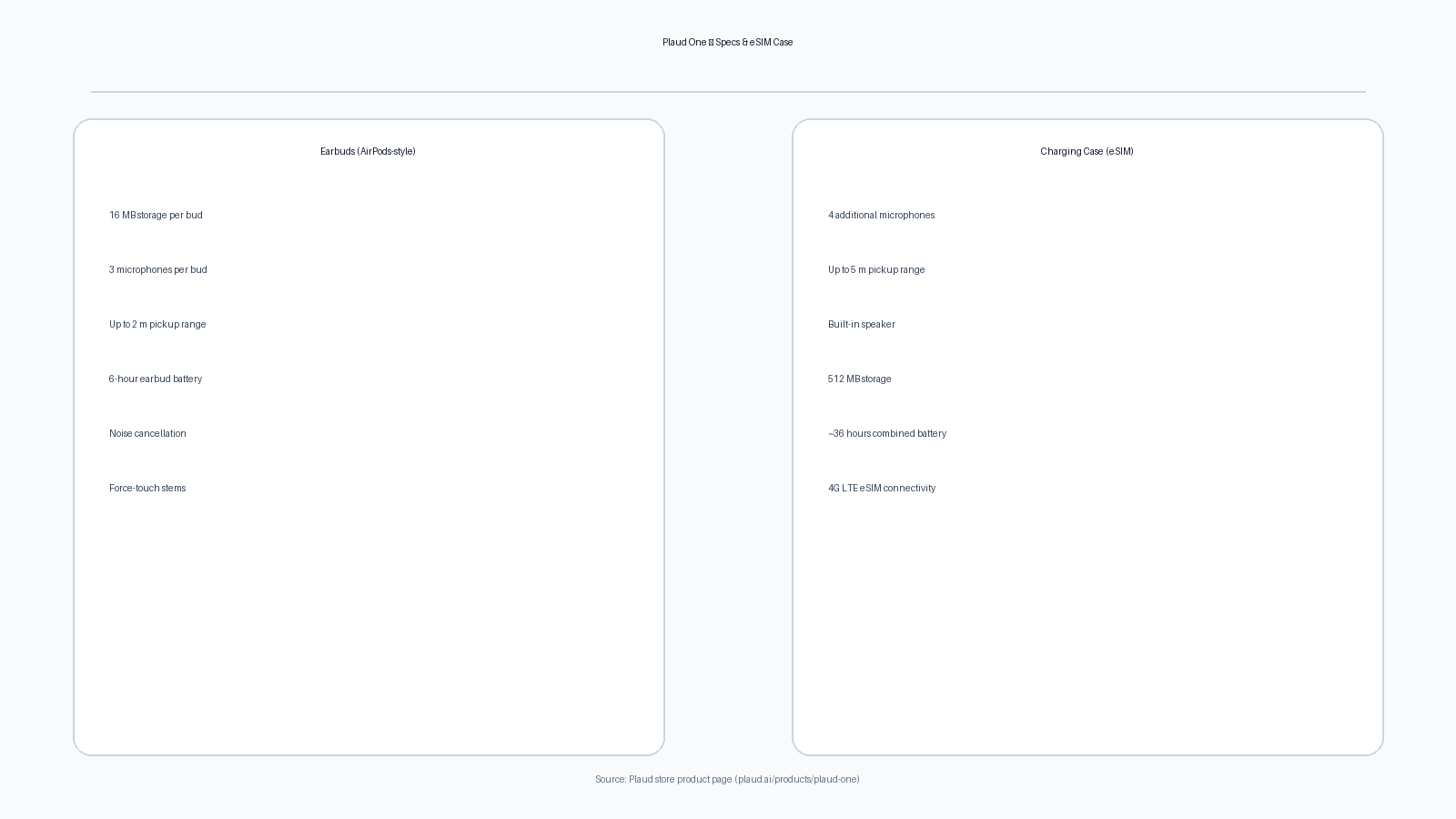
The Plaud One is a bare-bones earbud in the style of Apple’s AirPods, but the case is the trick. It carries a built-in eSIM, so the AI agent can record and act on what you say without Wi-Fi, a phone, or an app open Plaud One specs.
Each earbud holds 16MB of storage and three microphones that can pull audio from up to two meters away Verge specs. The case adds four more mics with a five-meter range, a speaker, and 512MB of storage Verge specs.
Plaud says the earbuds record for up to six hours, matching the estimated battery life, and the case stretches combined use to about 36 hours Verge specs. Noise cancellation and force-touch stems round out the controls.
Plaud’s summarization runs on what it calls Plaud Intelligence, its own model layer for turning a messy call into action items. The pitch is that you leave a meeting with the follow-up already drafted, not a transcript you have to read later.
Plaud says the agent side is where it gets interesting. Press the button on the case or say ‘Hey Plaud’ and the agent transcribes, summarizes, and then connects to Gmail, Google Calendar, Notion, and Slack to draft follow-ups Plaud One agent.
The case is the real upgrade over a phone. Most voice assistants still need a handset nearby and a live connection. Plaud’s answer is to put the connection in the case itself, so the agent keeps working when the phone is in a bag or out of range.
Why AI agent earbuds are the next wearables fight
This is the same bet every AI hardware maker is making: capture the conversation, then let an agent do the busywork. Plaud already says over 2.5 million people use its hardware or software, so it enters with reach Plaud One reach.
The pitch for AI agent earbuds is simple: capture, then act. I’ve been tracking ChatGPT Work, OpenAI’s agent for getting things done, and the pattern is the same across the industry.
Plaud enters with an installed base most hardware startups would envy, which changes the math on whether a wearable agent can actually find an audience.
Claude’s Cowork side panel shows the other half of this story: agents that live next to your work instead of inside a phone.
The bigger bet is that conversation capture becomes ambient. Instead of deciding to record a meeting, you’re always wearing the device that can. That shifts the agent from a tool you launch to a layer that quietly sits on top of your day. Plaud is trying to move that same idea onto your ear.
Where the Plaud One stops
Be clear about the limits before you preorder. The Plaud One is a capture and summarization device first, not a general-purpose computer you wear TechCrunch coverage.
Rivals like Viaim and Anker already sell similar note-taking earbuds, and software note-takers such as Granola, Fathom, and Read AI do the transcription and follow-up dance without new hardware TechCrunch coverage.
The eSIM case is the differentiator, and it’s a real one if you’re often away from signal or just hate pulling out your phone. For everyone else, the question is whether $249.99 beats the app you already have Plaud One pricing.
Privacy is the open question a launch post never answers. A microphone in your ear that can act on what it hears is powerful, and it’s also a lot of trust to hand a single app. Plaud will need to show the recording stays under your control before this leaves the early adopter crowd.
I wouldn’t call the Plaud One a must-buy yet. It’s a first-generation wearable agent with specs I haven’t tested, and shipping is weeks out. But it shows where the AI agent earbuds race is heading: off the screen and into your ear.
Reviewed & written by
Tony Simons
Tony has a bachelor's degree from the University of Phoenix and over 14 years of writing experience between multiple publications in the tech, photography, lifestyle, and deal industries.