
AI News
Google Antigravity Lands in Gemini Enterprise Plans
Google folded Google Antigravity into eligible Gemini Enterprise subscriptions, adding IDE extensions, pooled quotas, budget caps, and audit controls. Here's what ships, what's still preview, and who should flip it on.
 By Tony Simons 4 min read
Disclosure: This page may contain affiliate links; I may earn a commission at no extra cost to you. It never changes the verdict. Details

Disclosure
I may earn a commission from qualifying purchases. Opinions stay independent. Full disclosure
Google just moved Google Antigravity from a standalone product to a line item your company may already pay for. The coding agent is now included with eligible Gemini Enterprise subscriptions, and the August 20 announcement brings budget caps, pooled usage, and new IDE extensions along with it.
If your team holds Gemini Enterprise licenses, this changes the procurement math, because the separate add-on license, the extra invoice, and the second security review all disappear.
Google framed the update in a post from Scott Densmore, Senior Director of Engineering, and Damith Karunaratne, Group Product Manager, with the punchline that “everybody finally gets what they want”.
What Google Antigravity includes now
Google first showed Antigravity inside the Gemini Enterprise Agent Platform at I/O in May, and customer feedback since then clearly shaped this release.
Developers wanted coding agents on the surfaces they already use, governance teams wanted license management and security controls, and finance teams wanted pooled usage so no prepaid token goes unused.
The result is simple to describe: administrators can enable Google Antigravity and Android Studio for users on eligible Gemini Enterprise Standard, Plus, and Standard Emerging Market licenses.
Spend, security, observability, and usage metrics consolidate in the Gemini Enterprise admin console, so the governance team and the developers finally read from the same dashboard.
The spend controls are the real story
Anyone who has run an AI coding pilot knows the fear of a runaway bill, and Google clearly built for that fear first.
Administrators can set monthly project-level budget caps directly in the Billing console, with additional per-user and team controls rolling out later this year.
Pooled quotas let shared token pools flow to high-demand teams, so quota bought for one group doesn’t sit idle when another group is burning through requests.
If a team blows past the pool, admins can opt into overages with monthly spend caps, and excess usage transitions to standard consumption-based rates.
Centralized usage tracking rounds it out, covering token consumption, API calls, and developer activity.
Security and audit controls
The security story is familiar Google Cloud territory. IT teams can enforce policies such as workspace sandboxing plus browser and MCP server access, which keeps agents operating inside authorized environments.
That last part matters more than it sounds, because agent access to browsers and MCP servers is where most enterprise AI incidents start.
Audit logging turns on with a single toggle and can capture prompts, agent responses, and metadata for compliance reporting. Data ownership stays under Google Cloud’s Terms of Service, and agent activity executes inside your cloud boundary.
New IDE extensions ship the same day
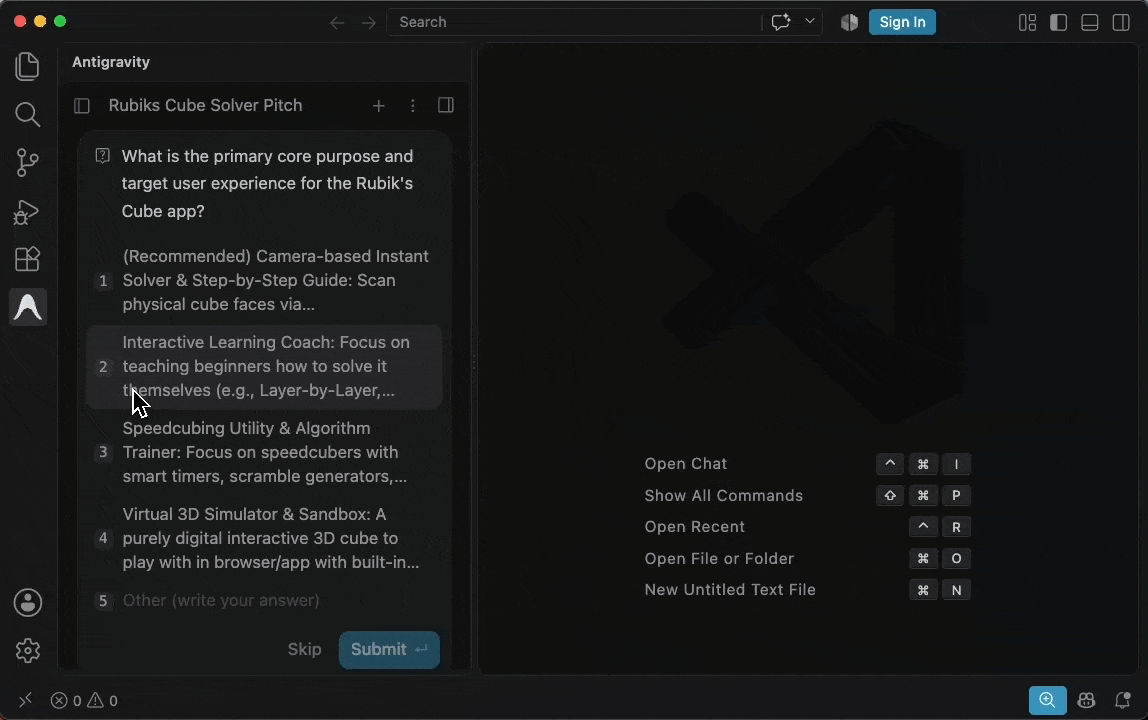
The other half of the announcement is about where developers actually work. Starting August 20, Google Antigravity runs in Visual Studio Code, along with Visual Studio, JetBrains, and Zed in preview, through new IDE extensions.
The Antigravity 2.0 desktop app and the Antigravity CLI cover the rest. Admins can enforce corporate identity standards through native support for Workforce Identity Federation and Application Default Credentials.
If you are comparing agentic coding tools this year, our best AI coding agents roundup tracks where Antigravity sits against the field. ITBrief covered the rollout on August 21 and described the package as a bid to give developers AI coding tools without managing separate licences, billing systems, and security settings.
What early customers say
The post lists 7 named customers and partners, including Accenture, AirAsia Next, CGI, Cognizant, Datamatics, Deloitte, and Wipro.
The AirAsia Next quote is the telling one, because it points beyond developers. CTO Nikunj Shanti says the company is putting its most advanced capabilities in front of its “entire workforce”, from software engineering to finance, marketing, legal, and HR.
Most of the other quotes lean on the same theme, pairing developer speed with enterprise-grade governance.
Reading them together, the pattern is clear: consultancies are buying the governance story first and the coding capability second.
Should you turn Google Antigravity on?
If you hold eligible Gemini Enterprise licenses, yes, this week.
The economics are the hook, because pooled quotas and project-level caps address the two complaints I hear most about AI coding rollouts: surprise bills and idle seats.
The competitive context matters too. xAI open-sourced the Grok Build harness and reset usage limits in July, a very different playbook aimed at the same developers.
If you are rethinking your whole AI stack, our AI subscriptions ranked piece puts this bundle in context.
One caveat before you announce it company-wide: Google’s fine print says broader support is “coming soon” for licenses beyond Standard, Plus, and Standard Emerging Market.
Google Antigravity in Gemini Enterprise turns a promising coding agent into a subscription feature your finance team can live with, and that’s usually how these tools go mainstream.
The developers get their tools where they work, the admins get their audit trail, and the finance team gets a number it can actually budget.
Reviewed & written by
Tony Simons
Tony has a bachelor's degree from the University of Phoenix and over 14 years of writing experience between multiple publications in the tech, photography, lifestyle, and deal industries.