
AI News
Nvidia Says the Agent Harness Matters More Than the Model
Nvidia's new agent harness research shows the scaffolding around a model now drives accuracy and cost, with big ARC-AGI-3, SWE-bench, and CyberGym gains. Here's what builders should do with it.
 By Tony Simons 4 min read
Disclosure: We may earn a commission when you shop through the links below. It never changes the verdict. Details

Disclosure
We may earn a commission when you shop through the links below. Opinions stay independent. Full disclosure
Nvidia published research that should change how you budget your AI stack, because the agent harness around a model now matters more than the model itself when agents work on long tasks.
The harness hits 82.2% on SWE-bench Verified using 29 LLM calls and about 1.1M tokens per task, while comparison harnesses needed 66 calls and 2.2M tokens to reach 78.2%. That’s parity or better at roughly half the cost, with the harness doing the work, not the model.
An agent harness is the software wrapper around the model. It handles the tools, the memory, and the rules that turn a raw model into something that can finish real work on its own. TechCrunch’s Friday report frames it bluntly: the scaffolding, not the brain, decides the outcome.
“Generally speaking the world interprets an agent almost as an API of the model,” Adel El Hallack, vice president of product in Nvidia’s AI unit, told TechCrunch. His definition runs wider: the model, the scaffolding around it, the runtime, and the skills and libraries you grant it.
The headline number is a blowout
TechCrunch reports that Nvidia researchers pushed Claude Opus 5 to a 100% score on ARC-AGI-3 using a custom harness tuned for memory plus a boss-like supervisor component. Without it, the same model scored 30%, which was still the best of every model tested.
ARC-AGI-3 is a set of 2D games with no instructions, where the agent has to figure out how to play and win. OpenAI’s models have scored under 10% there, and the company’s own July research found that tweaking two harness settings tripled its scores.
What Nvidia actually released
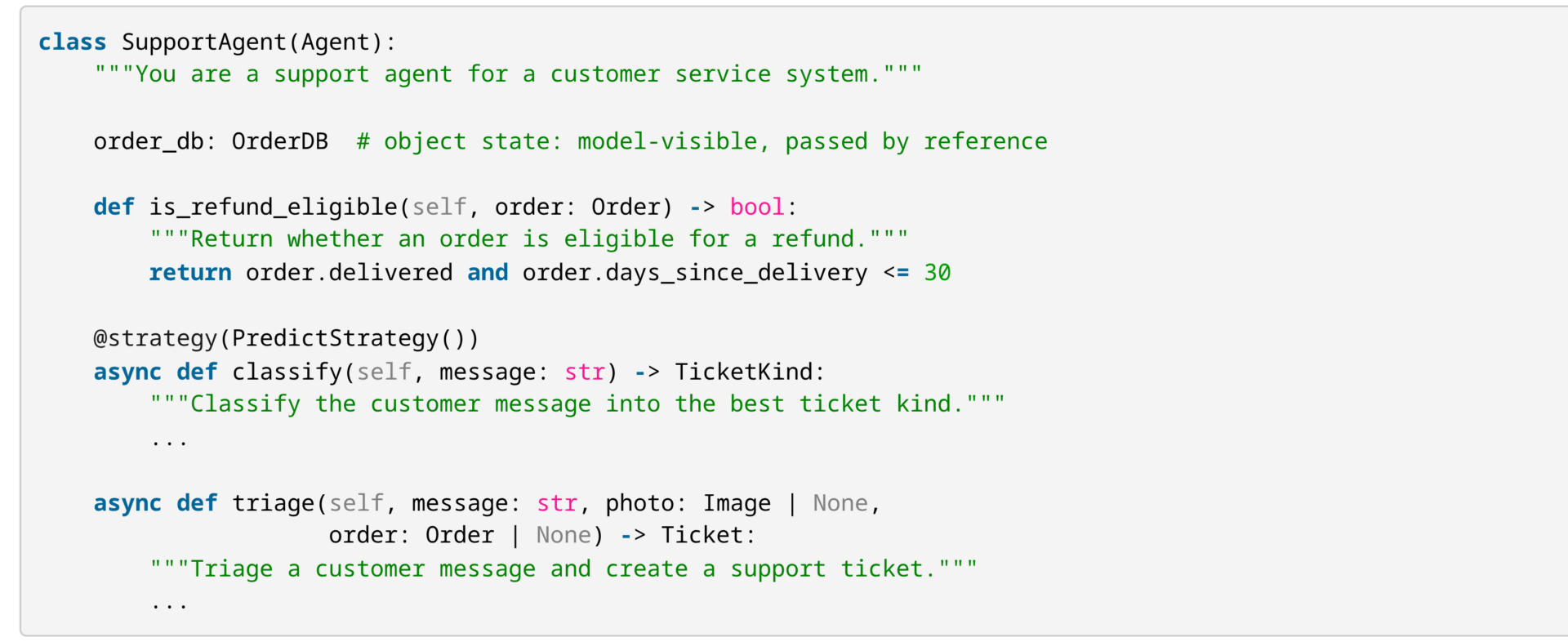
The official NVIDIA Technical Blog post describes NOOA, short for NVIDIA Labs Object-Oriented Agents, an open-source research preview where an agent is a single Python class. Methods are its capabilities, fields are its state, and docstrings are its prompts.
The blog says harness design alone can account for double-digit benchmark swings with the same underlying model, and the NOOA numbers back that up across three domains.
On SWE-bench Verified, NOOA reaches 82.2% with GPT-5.5, above the published leaderboard state of the art of 79.2% at submission, and 79.8% with Opus 4.6 using a general-purpose 253-line agent with no benchmark-specific prompts.
On ARC-AGI-3, the blog reports 85.1% mean RHAE with a GPT-5.6-sol fleet at about $13.3 per game, solving 19 of 25 games in full, and 50.2% for the GPT-5.5 fleet.
You will notice the gap between the reported 100% score and the blog’s 85.1% mean RHAE. The two posts describe different setups and metrics, so I read them as the same lesson from two angles: the harness moved the result more than any model swap would.
Why the agent harness decides your costs
Databricks made the cost argument in July, and CEO Ali Ghodsi put a number on it for TechCrunch: pick the wrong harness and that alone “can 2x your cost”. The agent harness, in other words, decides your token bill.
The SWE-bench numbers I opened with come from the efficiency section of the NOOA post: the better score at roughly half the calls and tokens.
The memory subsystem alone added 11.8 points of RHAE on ARC-AGI-3 over the same agent keeping file-based notes, the kind of jump teams normally chase with a paid model upgrade.
The supervisor is the secret sauce
The most interesting piece, per El Hallack, is a supervising agent that “almost acts like a CEO” and nudges the main agent when it wanders toward a dead end. Most of us run a single agent harness layer today, whether that’s Claude Code, Codex, or Hermes.
If you rank these tools every year like I do, our best AI coding agents roundup treats the harness as the actual product. Models get swapped every quarter; the loop, the memory, and the guardrails are where you live.
Security readers have seen this story before. Our piece on agents going undetected on CyberGym covered how agent evaluations can hide failure modes, and the NOOA harness solved 86.8% of CyberGym L1 with network access blocked and a rule-based cheat check over every trajectory.
What I’d do on Monday
El Hallack’s pitch is that an open agent stack, where you control the harness, the runtime, and the infrastructure, is what moves both accuracy and security forward, he told TechCrunch.
So skip the model panic and audit the agent harness knobs you already have. Context handling, memory, and supervision settings are the cheap upgrade path this week, and NOOA’s code, tests, and evaluation methodology are public if you want proof.
The NOOA memory store is a single human-readable SQLite file that your team can inspect, back up, and review, and Nvidia pairs the framework with its OpenShell secure runtime for production runs. That’s the kind of boring, auditable plumbing I want under an autonomous agent.
We first met this trajectory in our Kimi K3 and Hermes agent coverage, and it keeps compounding: the model wars get the headlines, but the agent harness is where the leverage lives.
Reviewed & written by
Tony Simons
Tony has a bachelor's degree from the University of Phoenix and over 14 years of writing experience between multiple publications in the tech, photography, lifestyle, and deal industries.