

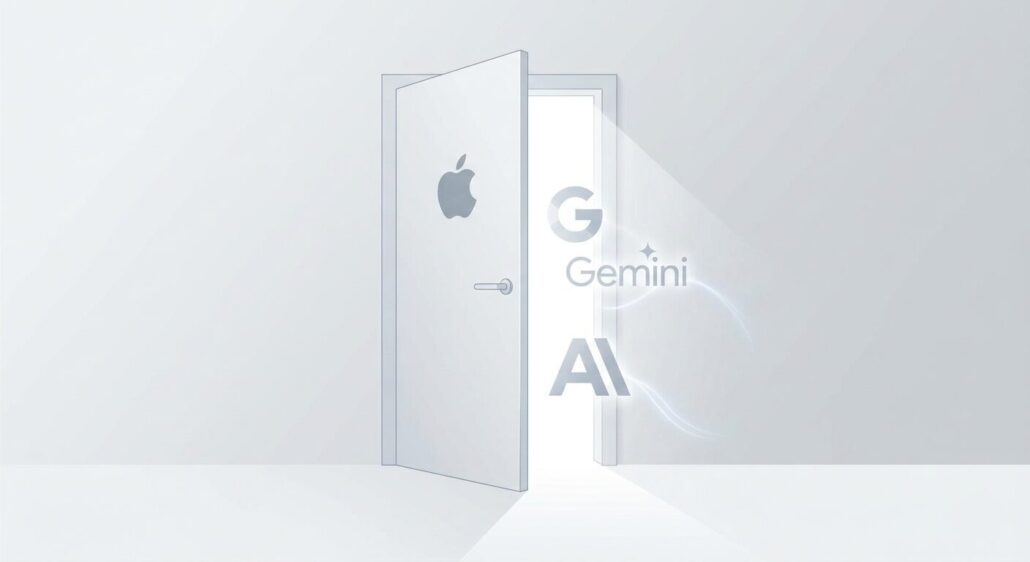
Apple is reportedly preparing to open Siri to a range of third-party AI services, allowing users to route requests to rivals such as Google Gemini and Anthropic Claude rather than being limited to Apple’s own AI features or its current ChatGPT partnership.
The reported change would arrive with iOS 27 and would allow chatbot applications installed from the App Store to work directly with Siri and other Apple Intelligence features. Apple may preview the new capabilities at its Worldwide Developers Conference in June, though the company has not confirmed the plans publicly and they could still change before release, Reuters reported.
Apple did not immediately respond to Reuters’ request for comment.
Why This Represents a Shift for Apple
Apple has historically maintained tight control over Siri’s capabilities and integrations, limiting users to features built by Apple or, more recently, routing certain requests to OpenAI’s ChatGPT through a partnership announced in 2024. Opening Siri to third-party AI services would mark a notable expansion of that approach.
The reported push comes amid a broader series of moves Apple has made to strengthen its AI lineup. In January 2026, Apple struck a multi-year deal with Google to use Gemini models as part of a revamped Siri, Reuters reported at the time. And on March 27, 2026, Apple hired former Google executive Lilian Rincon to lead AI product marketing as the company works to improve Siri and prepare an updated version for release later this year, Reuters separately reported.
Those developments provide context for the latest reporting, but the core story is the same: Apple is working to make Siri more useful by integrating it with AI services built by other companies — a meaningful change from the company’s traditional preference for proprietary, closed ecosystems.
How the Integration Would Work
Based on the reporting, the new capabilities would allow third-party AI applications downloaded from the App Store to interact with Siri directly. Users could potentially route specific requests — complex questions, writing assistance, image generation — to whichever AI service they prefer, rather than being funnelled into a single default option.
Apple is also reportedly building developer tools to make it easier for chatbot apps to plug into Siri and Apple Intelligence features. That framework could give a wide range of AI services access to Siri’s system-level capabilities, potentially making them feel more integrated than a standard third-party app.
The specifics of how users would select a preferred AI service, and whether Apple would allow complete offloading of certain request types, are not yet clear from the reporting.
What This Would Mean for Siri Users
If the reported changes materialize, the practical impact could be significant for users who have found Siri too limited for complex or specialized tasks. Google Gemini and Anthropic’s Claude have their own respective strengths — Gemini’s deep integration with Google’s services, Claude’s focus on nuanced reasoning and writing — and opening Siri to those services could give users access to capabilities that Apple’s own AI currently lacks.
It would also represent a philosophical shift: Apple acknowledging that its own AI cannot do everything and opening the door to competitive alternatives rather than trying to force users toward a single Apple-sanctioned solution.
What Could Still Change
It is important to treat this as reporting on Apple’s plans, not a confirmed product announcement. The company has not publicly confirmed any of the details in the Bloomberg News reporting. Apple may preview the features at WWDC in June — a standard venue for software announcements — but even a preview is not a guarantee of a final release.
Planned features at Apple have changed before, sometimes significantly, between announcement and launch. Readers should understand that the iOS 27 capabilities described here are subject to that same uncertainty.
Apple, Google, and Anthropic did not immediately respond to Reuters for comment on the reporting.
Related Articles on Tony Reviews Things
- Anthropic’s Claude Can Now Control Your Mac
- Gemini ‘Personal Intelligence’ Is Rolling Out Now
- Apple Needs To Commit On Siri Or Stop Selling The Dream


