
Apple Needs To Commit On Siri Or Stop Selling The Dream
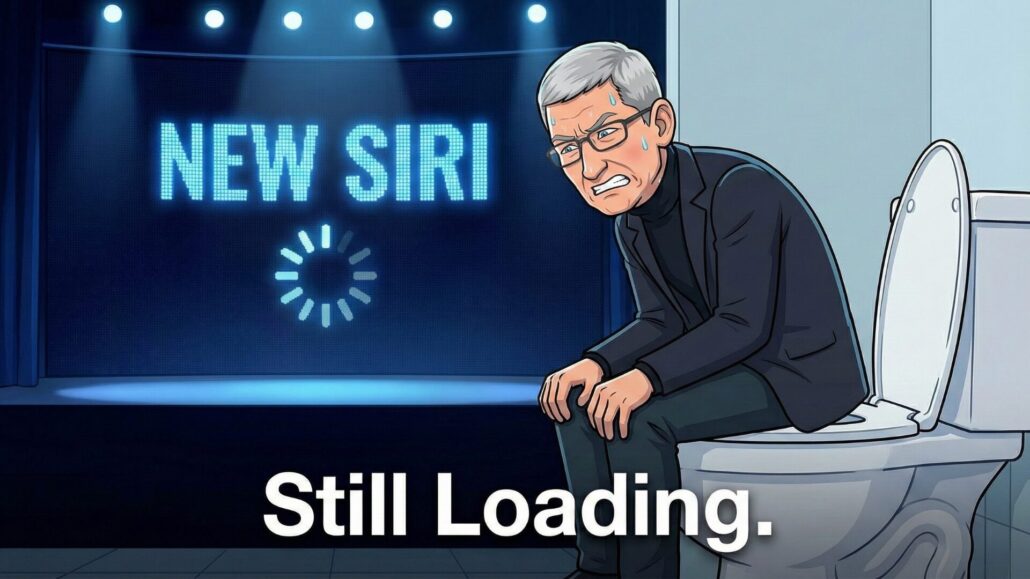
Apple has two choices with Siri: ship the real upgrade—the one that actually understands context, does multi-step tasks without face-planting, and doesn’t make you regret saying “Hey Siri” out loud—or stop marketing the promise like it’s basically here.
Because right now, Siri is stuck in the worst possible middle ground: Apple keeps pitching an AI era with “Apple Intelligence,” while the one thing most people recognize as the Apple assistant still feels like it’s powered by vibes, hope, and a roulette wheel.
TL;DR
- Siri can’t stay the punchline while Apple sells an “intelligent” future.
- If the big Siri overhaul is real but far away, Apple needs to say that plainly and stop implying otherwise.
- The fix isn’t flashy. It’s reliability, scope discipline, and a clear shipping story.
Time To Shit Or Get Off The Pot, Tim…
It’s time for Apple to either shit or get off the pot with Siri.
Not in a “ship half-baked AI tomorrow” way. In a “stop trying to have it both ways” way.
Apple has spent years threading the needle between “we’re careful and privacy-forward” and “look, we’re doing AI too.” That might’ve been a workable strategy when voice assistants were mostly about setting timers and sending texts.
But the moment Apple tied the brand to a broader AI identity, Siri stopped being a cute side feature. It became a credibility test.
And Apple is currently failing it in the most annoying way possible: not with one spectacular screw-up, but with a slow drip of “soon.”
The Leak Isn’t The Point The Pattern Is
Every time Siri pops back into the conversation, whether it’s a leak, a rumor roundup, a feature flag, or a “sources say” report, the story is usually the same.
Something big is coming.
Just… not yet.
That alone isn’t a crime. Complex systems take time. Voice is hard. Personal context is harder. Doing it safely on-device (or with privacy protections) is harder still.
But here’s the problem: Apple isn’t just quietly building Siri. Apple is actively benefiting from the perception that Siri is about to level up.
That perception sells phones. It sells the platform story. It helps Apple look like it’s not late to the party. Even if the assistant people actually use remains the same inconsistent mess.
If Siri has truly been headed for a real, modern upgrade for multiple cycles now, we’re past the point where “trust us” is good enough.
Apple Intelligence Doesn’t Fully Land Until Siri Stops Sucking
Apple can ship all the clever AI features it wants—text rewriting, smart summaries, new frameworks for developers, on-device model capabilities.
But to normal humans, “Apple AI” will be judged by one thing:
Does Siri finally feel like it belongs in this decade?
Siri is the front door. It’s the feature everyone recognizes. It’s what your aunt tries first. It’s what people use while driving. It’s the thing you reach for when your hands are full. It’s the assistant embedded into the entire Apple ecosystem like a permanent home fixture.
And when that thing is unreliable, it makes the whole AI story feel like a press release instead of a product.
Apple’s biggest Siri problem isn’t that it doesn’t have enough features. It’s that it doesn’t inspire confidence. When Siri mishears you, refuses to do something it did yesterday, or punts to a web search like it’s giving up on life, the takeaway isn’t “Siri has limitations.”
It’s “Apple can’t be serious.”
The Real Siri Upgrade Apple Needs Isn’t Glamorous
If Apple wants to win back trust, it needs to stop treating Siri like a stage demo and start treating it like plumbing.
Here’s what should come first.
1) Reliability Over Theater
Siri doesn’t need to be a personality. It needs to be dependable.
- Timers and alarms should work every single time.
- Messages and calls should be handled cleanly with natural phrasing.
- Reminders should be smart about time and context without turning into a guessing game.
- It should handle follow-ups without acting like you changed languages mid-sentence.
If Siri can’t nail the basics consistently, nothing else matters. Not “personal context.” Not “agentic workflows.” Not “LLMs.”
You don’t build a penthouse on a cracked foundation.
2) Multi-Step Tasks That Actually Finish
People don’t want an assistant that can talk about doing things. They want an assistant that does the thing.
- “Text my partner I’m running 15 minutes late and share my ETA.”
- “Turn on the living room lights, set them to 30%, and start my chill playlist.”
- “Find that email from last week about the dentist and add the appointment to my calendar.”
These are normal. They’re not sci-fi. And right now, Siri’s success rate on anything beyond a single command still feels like a coin flip.
If Apple wants to sell a future where Siri is an “agent,” the agent needs to stop ghosting halfway through the mission.
3) A Scope Statement That Doesn’t Insult People
If a new Siri is coming, Apple needs to define what it actually means in non-marketing language.
Not “more personalized.” Not “more helpful.” Not “more intelligent.”
Tell people what it can do at launch.
Tell people what it can’t do yet.
Tell people what data it uses, where it runs, what stays on-device, and what doesn’t.
And tell people the rough timeline in human terms.
Because when Apple doesn’t fill in the blanks, the internet does it for them. That’s how we get a cycle of unrealistic expectations followed by disappointment, followed by “Apple fell behind,” followed by another promise.
4) Stop Pretending Siri’s Timeline Is A Surprise
If the smarter Siri is a point release thing—a spring update, a late-cycle feature, a “next year” situation—then Apple should stop talking like it’s basically shipping.
This is where Apple’s messaging has gotten itself into trouble: it keeps wanting credit for the future version of Siri while shipping the present version of Siri.
You don’t get to be the “we’re careful” company and the “look how futuristic we are” company without eventually paying for it.
The Counterargument Apple Is Being Careful For Good Reasons
Here’s the charitable read: Apple is slow because it’s responsible.
And honestly? That’s not a dumb argument.
A voice assistant is different than a chatbot app. If Siri screws up, it can:
- send the wrong message to the wrong person,
- surface private information out loud,
- change your schedule,
- mess with smart home devices,
- do something embarrassing while you’re driving.
Now layer in generative AI, hallucinations, and a system that’s expected to interpret human language fluidly. The risk goes way up.
So yes: Apple should be careful.
Why That Excuse Is Wearing Thin
Being careful doesn’t mean being vague.
Being responsible doesn’t mean letting your customers infer that the future is basically here.
And “privacy-first” doesn’t mean you get to sell an AI narrative while the most visible AI product you have still struggles with routine requests.
If Apple wants patience, it needs to earn it with clarity.
Instead, the pattern has felt like this:
- Apple hints at a smarter Siri.
- People get excited because Siri has been due for a glow-up for years.
- The rollout takes longer than implied.
- Siri, today, still feels like Siri.
- Everyone gets more cynical.
The longer this goes on, the more Apple turns Siri into a brand liability. Not because Siri is uniquely awful (it’s not), but because Apple’s brand is built on it just works.
Siri is the exception that keeps proving the rule.
What Apple Should Do Next
Apple doesn’t need to panic ship. It needs to commit.
Here’s what that looks like.
Put Siri On A Real Product Track
Treat Siri like a major product with:
- a clear set of near-term wins,
- measurable quality targets,
- and a visible cadence.
That doesn’t mean Apple has to publish a public Trello board. But it does mean Apple should stop acting like Siri’s evolution is a mysterious art project that may or may not finish when the moon is right.
Ship Incremental Gains That People Can Feel
If the full “new Siri” is far off, Apple should still deliver meaningful improvements in the meantime.
Not “Siri got a new animation.” Not “Siri has a new tone.”
Actual, lived improvements:
- better transcription accuracy,
- better follow-up handling,
- fewer random refusals,
- and fewer dead ends.
People don’t need Siri to be perfect. They need Siri to be less frustrating.
Be Honest About Availability
If Apple Intelligence is going to be marketed heavily, Apple must be brutally clear about which parts are shipping now and which parts are still cooking.
Not in the fine print.
In the headline.
Because the average person doesn’t read footnotes. They remember the vibe of the ad.
And right now, the vibe has been: “Apple’s assistant is about to get smart.”
Meanwhile, Siri is still out here asking you to unlock your iPhone so it can do something it should have already been able to do.
What Readers Should Do
If you’re buying hardware today, buy it for what it does today.
Don’t pay an “AI tax” for promises.
If Siri is a core part of your day—smart home, driving, hands-free work—assume Siri will remain inconsistent until you see concrete proof otherwise.
And if Apple finally ships the real Siri upgrade? Great. Celebrate it then.
But stop giving Apple credit for a future version of Siri while living with the present version.
The Bottom Line
Apple can absolutely build the Siri people want.
But Apple has to stop playing the middle. Stop teasing. Stop implying. Stop selling the dream while delivering the same old assistant.
Ship the real Siri.
Or stop pretending it’s basically here.







Leave a Reply
Want to join the discussion?Feel free to contribute!