
Google Is Killing The Dark Web Report (Because It Wasn’t “Helpful”)
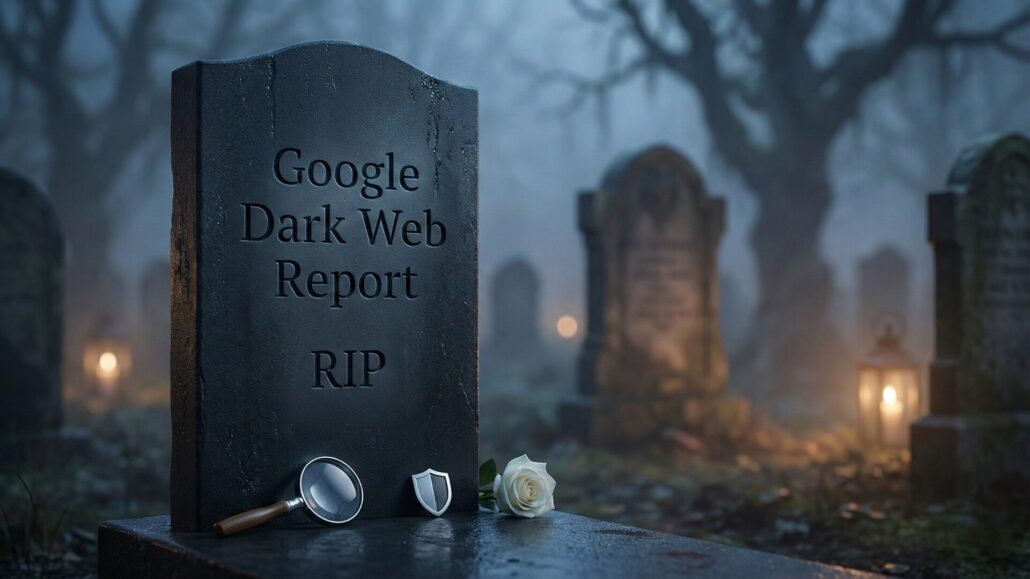
Another one for the graveyard.
Google has announced it is discontinuing its Dark Web Report feature, a tool that, until recently, was a selling point for its paid Google One subscriptions.
If you’ve been relying on Google to tell you when your passwords hit the black market, you have until early 2026 to find a replacement.
The reason for the kill?
Google claims that simply telling you that your data was stolen isn’t actually “helpful” if they can’t tell you how to fix it. Fair point, but it feels like another case of Google shuffling deck chairs on a sinking product strategy.
Here is the breakdown of the shutdown and what you should actually be using instead.
Google Dark Web Report
Google is removing the dashboard that monitors breaches for your personal info. The tool is being retired to focus on “actionable” security features.
- Scans Stop: January 15, 2026. No new breaches will be flagged after this date.
- Data Deleted: February 16, 2026. The dashboard and your history will be wiped.
- The Alternative: Google pushes users to “Results about you” to scrub personal info from Search.
Why Google is pulling the plug
The Dark Web Report started life as a “premium” perk for Google One subscribers in 2023 before Google realized that gatekeeping security features is a bad look and made it free for all consumer accounts in mid-2024. Now, barely a year later, it’s dead.
In an email sent to users, Google stated: “While the report offered general information, feedback showed that it didn’t provide helpful next steps.”
This is the polite corporate way of admitting the tool was kind of useless. Finding out your email was part of a breach from 2018 is stressful, but there is rarely anything you can do about it other than change your password—which you should have done years ago. Google wants to pivot resources toward tools that actually do something, like Passkeys and Results about you.
What happens next?
The timeline is short. If you currently have a monitoring profile set up, here is your schedule:
- January 15, 2026: The active scanning stops. You will no longer receive alerts if your info pops up on the dark web.
- February 16, 2026: The interface goes dark. All historical data and your monitoring profile are deleted from Google’s servers.
You don’t need to manually delete your profile unless you want to scrub it early; Google will nuke the data for you come February.
The better alternatives
Let’s be honest: Google’s tool was always a “HaveIBeenPwned Lite.” If you want actual monitoring, use the tools that security nerds have been using for years.
- HaveIBeenPwned: Troy Hunt’s database is the gold standard. It’s faster, more comprehensive, and doesn’t require you to live inside the Google ecosystem.
- Bitwarden / 1Password: Good password managers have this built-in. They don’t just tell you about a breach; they flag the specific login entry that needs changing. That is the “actionable step” Google was missing.
- Google’s “Results about you”: This is where Google is pointing you. It doesn’t scan the dark web, but it scans Google Search for your phone number or home address and lets you request removal. That is arguably more valuable for privacy than knowing your Myspace password is being sold for pennies.








Leave a Reply
Want to join the discussion?Feel free to contribute!