
iPhone 18 Pro Report Claims Under-Screen Face ID And More
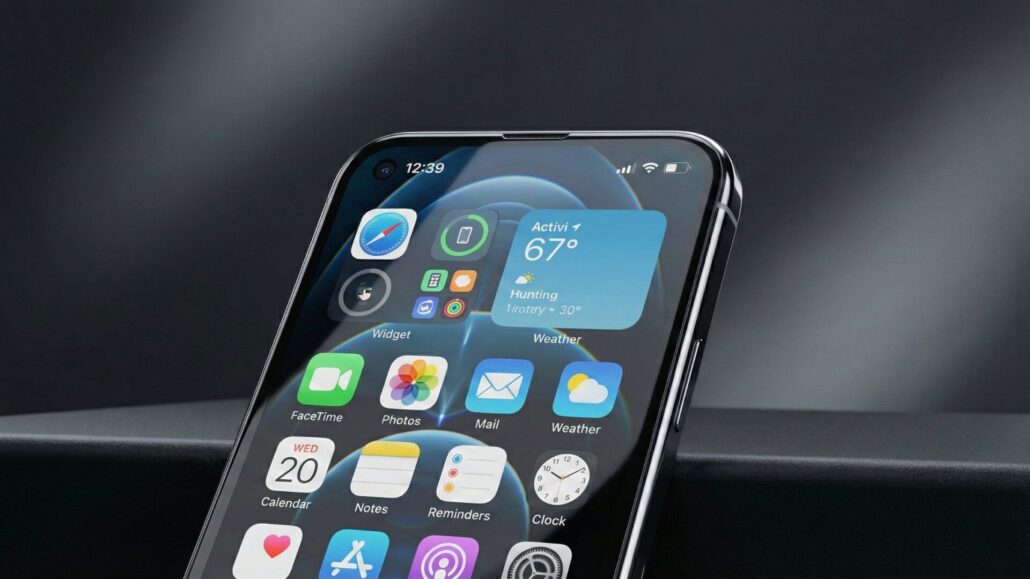
Apple’s next big iPhone “clean screen” push might finally be real — at least on the Pro models.
A new report says the iPhone 18 Pro and iPhone 18 Pro Max will move Face ID components under the display, while shifting the selfie camera to a small cutout in the top-left. The same report also claims Apple is planning a more “real camera” upgrade: a mechanical aperture on at least one rear camera.
iPhone 18 Pro Screen And Camera Report
A new report claims Apple’s next Pro iPhone goes for a cleaner front: under-screen Face ID, a tiny top-left selfie cutout, plus a more “real camera” upgrade.
- Cleaner Front: Face ID components reportedly move under the display, leaving a single top-left punch-hole for the selfie camera.
- Camera Hardware Shift: A mechanical/variable aperture is rumored for at least one rear camera — potentially better exposure control in harsh light.
- Big Silicon Bet: The Pro models are said to get an A20 Pro on 2nm with new packaging that could improve efficiency and thermals.
What’s The Buzz About?
A new roadmap-style report says Apple’s iPhone 18 Pro lineup (expected in 2026) is planned to get under-screen Face ID, plus a relocated selfie camera that sits in the top-left corner.
The Important Stuff You Need To Know
Under-Screen Face ID And A Corner Selfie Camera
The claim here is straightforward: Apple hides the Face ID hardware under the display and leaves just a single camera cutout for selfies — specifically in the top-left. If that happens, the obvious outcome is a cleaner-looking screen and a status bar that doesn’t have to wrap around a pill-shaped hole.
This isn’t the first time we’ve heard “under-display Face ID is coming next year.” What’s notable is how specific the cutout description is. That kind of detail tends to show up when a design is far enough along that people in the supply chain are looking at actual layouts, not just vibes.
A Mechanical Aperture For At Least One Rear Camera
The same report says Apple wants a mechanical iris (variable aperture) on at least one rear camera. In plain terms: the lens can physically change how much light comes through.
If Apple does it right, this could improve consistency in tricky lighting — bright daylight, mixed indoor scenes, harsh highlights — while also giving it more control over depth of field. If Apple does it wrong, it’ll be a “Pro” feature you never touch while the phone quietly chooses whatever setting it was going to choose anyway.
A20 Pro And A New Chip Packaging Approach
The report also points to an A20 Pro built on TSMC’s 2nm process, plus a packaging shift that could integrate memory more directly with the chip.
The practical promise: better performance and efficiency (and maybe better thermals) without Apple having to keep inflating battery size or throttling under load.
Why It Matters
If the report is right, the iPhone 18 Pro isn’t just “slightly faster, slightly better camera.” It’s Apple pushing three things people actually notice every day:
- A cleaner display and fewer UI compromises around the screen cutout.
- More camera control in hardware, which could mean better real-world results if Apple pairs it with the right sensor upgrades.
- A more advanced chip platform that might help both battery life and on-device AI workloads.
Also: this is Apple inching closer to the endgame — a truly uninterrupted slab of glass — but doing it in stages instead of risking a big quality hit all at once.
Tony’s Take
Under-screen Face ID has been “about a year away” for what feels like forever, but the specific move to a single corner camera cutout is at least believable. It’s the kind of compromise Apple would ship while it keeps grinding on under-display camera quality.
The potential bummer is that Dynamic Island has become genuinely useful. If Apple removes the pill-shaped cutout, iOS either has to recreate that experience purely in software (fine, but it won’t feel the same), or quietly admit the Island was always a clever UI bandage over a hardware problem Apple is finally solving.
As for the mechanical aperture: I’m interested, but not automatically impressed. Pair it with a bigger sensor and smarter defaults and it could matter. Treat it like a spec-sheet flex and it’ll land somewhere between “neat” and “who cares.”
What To Keep An Eye Out For
- Whether other reliable reporting backs up the exact cutout layout (top-left camera is a very specific claim).
- Any signs iOS starts adapting to a world where Dynamic Island isn’t guaranteed hardware.
- More concrete supply-chain chatter around 2nm + new packaging, especially if it changes thermals and battery life in meaningful ways.





Leave a Reply
Want to join the discussion?Feel free to contribute!